Key Highlights
- Indian applicants often face long green card processing times in employment categories.
- Your priority date decides your place in line for a green card.
- The visa bulletin shows when that priority date becomes current.
- In 2024, the biggest wait time issue for Indians remained EB-2 and EB-3 backlogs.
- Family cases can move faster than some employment cases, depending on category.
- Immediate relative cases avoid visa bulletin wait limits and usually move through the process faster.
Introduction
If you are an Indian applicant planning for a green card in the United States, you have likely noticed how confusing processing times can be. Some cases move through routine steps, while others stay stuck for years because of visa limits tied to country of birth. That gap matters. Your category, your priority date, and the monthly visa bulletin all shape the real timeline. Once you understand those moving parts, the green card process becomes easier to track and plan around.
Overview of Green Card Processing for Indians
For Indian applicants, green card processing usually includes two parts. First, there are standard immigration services steps like filing the petition and waiting for approval. Then there is the visa line itself, which can be much longer for certain categories.
What are the main steps in the green card process for Indians? In simple terms, you file, get a priority date, wait for visa availability, and then complete either adjustment of status or consular processing. The next sections break that down clearly.
Key Stages in the Green Card Process
The green card process for Indians depends on the category, but the structure is usually similar. Employment cases often begin with labor certification, while family cases begin with a petition from a qualifying family member. After that, petition processing and visa availability become the main focus.
Most Indian applicants move through these core stages:
- Filing the employer or family-based green card petition
- Completing labor certification or perm labor certification when required
- Waiting for petition processing and the priority date to become current
- Finishing consular processing or an adjustment of status application
Once your approved petition is in place, the visa bulletin becomes critical. If you are already in the United States, you may file adjustment of status when your category allows it. If you are outside the country, you usually complete consular processing through a U.S. embassy or consulate.
Commonly Chosen Green Card Categories for Indian Applicants
Indian green card applicants commonly use both employment categories and family categories. The biggest backlogs for Indians appear in employment-based routes, especially EB-2 and EB-3. That is why many professionals track those lines so closely.
The most common green card categories include:
- Employment categories such as EB-2 and EB-3 for skilled workers and professionals
- Family categories for spouses, children, parents, or siblings, depending on the petitioner
Right now, the EB-2 green card processing time for Indians is heavily affected by backlog rather than only USCIS work speed. Compiled information shows Indian professionals may face waits of 10 or more years in EB-2 and EB-3 because of visa limits, even when petition steps move faster.
Recent Trends in Green Card Wait Times for Indians
Recent green card wait times for Indian applicants have continued to reflect very high demand in employment-based categories. The key issue is not just paperwork processing times. It is the line for visa numbers.
So, what is the current green card processing time for Indians in 2024? Based on the compiled information, many Indian professionals in EB-2 and EB-3 still face a wait time of 10 years or more, while other categories may move more quickly depending on visa availability and case type.
2024 Updates on Indian Green Card Processing
In 2024, Indian green card processing continued to be shaped by category and visa bulletin wait. If you are asking about the green card timeline, the short answer is that employment cases remained the most delayed. The actual green card application may be ready, but visa availability still controls when final approval can happen.
For many Indian applicants, especially in EB-2 and EB-3, the practical timeline stayed far longer than normal petition processing alone would suggest. Compiled information indicates waits of more than 10 years can apply in these categories because too many people are ahead in line.
That means your case can be document-ready and still paused. This is why checking the monthly visa bulletin matters so much. In 2024, the real issue for many Indians was not whether they qualified, but when their priority date would finally become current.
Comparison to Past Years’ Processing Times
Green card processing times for Indians have not moved in a straight line. Across each fiscal year, the biggest pattern has been continued pressure on employment-based categories. That is why your priority date matters more than a simple average timeline.
Here is a simple comparison based on the compiled information:
| Period | Indian Wait Time Pattern |
| Past years | Family cases often followed broader worldwide movement, while employment categories built large backlogs |
| 2024 | EB-2 and EB-3 remained heavily backlogged for Indian applicants |
| 2026 data referenced in compiled information | Indian professionals in EB-2 and EB-3 may face 10 or more years of wait time |
So if you are comparing 2024 to prior years, the main takeaway is continuity. Indian applicants, especially in employment tracks, still faced long waits because country caps and demand kept the line crowded.
Understanding Priority Dates and the Visa Bulletin
Your priority date is the date your petition was first filed. Think of it as your place in line in the green card process. For Indians, that date often becomes the most important part of the timeline.
The department of state visa bulletin tells you when the government is working on cases in your category. If your date is earlier than the date shown, you may move forward. That visa bulletin wait is what defines many Indian green card timelines.
How Priority Dates Work for Indian Applicants
For Indian applicants, the priority date is not just a filing detail. It is the date information that decides when green card processing can continue toward final approval. In many categories, especially employment-based ones, your place in line can mean years of extra waiting.
Here is how it works in practice:
- The priority date is usually set when the petition is properly filed
- The Department of State publishes monthly dates showing which cases can move ahead
- If your date is earlier than the listed cutoff, your case may advance
If your date is not current, you wait even if your approved petition is already in hand. For many people in the United States, this explains why the green card process feels stalled. The file may be complete, but the visa number is still not available.
Where to Monitor Visa Bulletin Announcements
If you want the latest visa bulletin updates for Indian green card wait times, the best source is the State Department. The compiled information specifically points readers to travel.state.gov for the official department of state visa bulletin.
You should monitor:
- The monthly visa bulletin on the State Department website
- Your category, such as EB-2, EB-3, or family preference
- The country column that applies to India
Because movement can change each month, regular checks matter. The monthly visa bulletin is usually the clearest way to see whether your date is close, current, or pushed back. If you are planning around work, travel, or filing steps, this one document can help you make better timing decisions.
Explained: Why the Green Card Waiting Period Is So Long for Indians
The green card wait for Indians is long mainly because of country caps and very high demand in certain categories. U.S. immigration law limits how many visas can go to one country each year.
That means Indian green card applicants compete for a fixed share even when far more people apply. Add retrogression, and the waiting periods can stretch even more. This is why many Indian professionals face delays that go far beyond standard form processing.
Effects of the Per-Country Cap
The per-country cap is one of the biggest reasons for Indian green card backlogs. Under this rule, no country can receive more than 7% of the total green cards available in the capped categories each year. Your country of birth, not the strength of your case, affects the line.
This creates long wait time problems because:
- India has far more applicants in some categories than the annual share allows
- The green card process keeps accepting new filings while old cases remain pending
- Backlogs grow when demand stays high year after year
So why is the wait so long for Indians? The answer is simple but frustrating. The cap treats high-demand and low-demand countries under the same limit. As a result, Indian applicants can wait many more years than people in the same category born elsewhere.
Impact of High Demand and Retrogression on Indian Cases
High demand keeps Indian cases under pressure, especially in employment categories. Even when many people are ready to move forward, only a limited number of visas can be issued. That mismatch causes a longer green card wait time.
Retrogression makes this even harder:
- A date in the visa bulletin can move backward instead of forward
- This often happens when too many cases are ready before the fiscal year ends
- Applicants may lose progress they thought they had gained
How does visa retrogression impact Indian applicants? It can delay a green card application even after years of waiting. You may think your turn has arrived, then see the visa bulletin pull back. That is why monthly tracking is essential for Indian cases with heavy demand.
Family-Based vs. Employment-Based Green Card Processing for Indians
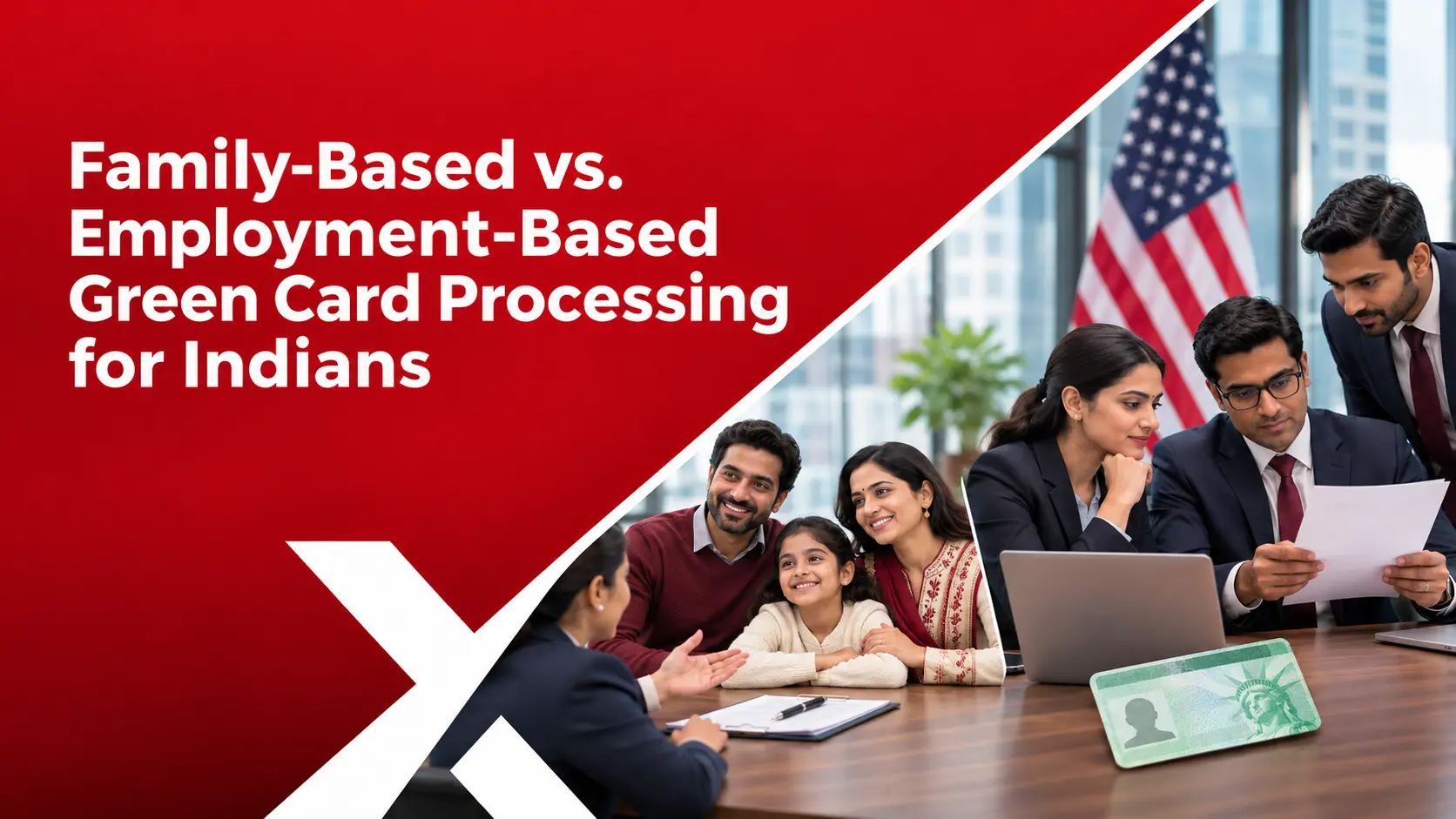
Family-based green card and employment-based green card cases do not move at the same pace. The category you use changes the waiting periods in a major way. Some family cases avoid the longest delays.
For Indians, employment-based green card processing times are often the hardest because of EB backlogs. Family cases filed by or for permanent residents can still take time, but immediate relative cases for U.S. citizens are usually much faster since they avoid the visa line.
Wait Times for Family-Based Green Card Applications
A family-based green card timeline depends on whether the case falls into family preference categories or the immediate relative group. That distinction matters a lot for any green card applicant from India.
Here are the main patterns:
- Immediate relative cases are not subject to the visa number wait
- Spouses, unmarried children under 21, and parents of U.S. citizens may qualify as immediate relative cases
- Family preference categories can face longer waiting periods
- A permanent resident who later naturalizes may improve the timeline for some family members
If you want to speed up the green card process through family channels, one of the clearest options in the compiled information is naturalization by the petitioner. That can move a spouse or minor child into an immediate relative category, removing the country-based wait.
Wait Times for Employment-Based (EB) Green Cards
Employment-based green card wait times are where many Indian professionals feel the greatest pressure. Even when eligibility requirements are met and the approved petition is secured, the visa line can still stretch for years.
For many EB cases, the process may include:
- A perm labor certification before the immigrant petition
- Petition approval through the employment-based system
- Waiting for visa availability after approval
So, is the wait different for highly skilled Indian professionals? Yes, often it is still very long if they are in oversubscribed categories like EB-2 or EB-3. Premium processing may reduce some petition steps measured in business days, but it does not erase the backlog itself. Based on the compiled information, EB-2 for Indians may still involve 10 or more years of waiting.
EB-2 and EB-3 Green Card Timelines for Indians
For Indian skilled workers, EB-2 and EB-3 are two of the most watched categories. Both can involve very long green card timeline estimates because demand is much higher than annual visa availability.
If you are asking about current processing times, the compiled information shows that Indian professionals in EB-2 and EB-3 may face waits of 10 years or more. The exact pace depends on visa bulletin movement, not just how quickly forms are reviewed.
Current EB-2 Processing Timeframes
EB-2 remains one of the most discussed categories for Indian applicants because the line is so long. While the perm labor certification process and petition stage may move at a normal pace, the wait for visa availability is often the real delay.
A typical EB-2 case can include:
- The perm labor certification process when required
- Filing the immigrant petition, sometimes with premium processing
- Waiting to file or complete adjustment of status once the date is current
What is the EB-2 green card processing time for Indians right now? Using the compiled information, the realistic answer is that many Indian EB-2 applicants may face 10 or more years before final green card approval. Premium processing can speed up petition review, but it does not move the visa line faster.
EB-3 Processing Updates for Indian Applicants
EB-3 also remains difficult for Indian applicants. For many skilled workers, green card processing times in this category look similar to EB-2 because both face heavy demand and limited visa numbers.
Key points for EB-3 include:
- The visa backlog, not just filing speed, drives the wait time
- Skilled workers may still wait many years after petition approval
- Final steps often depend on when an adjustment of status application can be filed or approved
In practical terms, the current green card processing time for Indians in 2024 stayed very long in EB-3 as well. The compiled information places Indian professionals in EB-2 and EB-3 at 10 or more years in many cases, depending on visa bulletin movement and category demand.
L-1 Visa To Green Card For Indian Professionals
Many Indian professionals in the United States first arrive on an L-1 visa and later plan a green card process. The path depends on whether you hold L-1A or L-1B status and which immigrant category fits your role.
Like similar visas, L-1 status does not remove the need to follow green card rules. You still need the right petition, visa availability when required, and then adjustment of status or consular processing. The next two sections explain how these paths usually differ.
Read blog: L1 Visa to Green Card: The Fastest Route for Indian Business Owners and Indian Professionals
L-1A Visa to Green Card
An L-1A visa can be a useful starting point for some Indian professionals because it may align with executive or managerial green card options. That does not guarantee speed, but it can simplify parts of the process for the right applicant.
Important points include:
- You still must meet the eligibility requirements of the green card category used
- The case begins with a green card petition
- Visa availability may still affect the final timeline
What is the quickest path to a green card for Indian professionals? Based on the compiled information, there is no single quick answer for everyone. Some people may qualify for stronger categories tied to leadership or extraordinary ability, while others remain stuck in backlog. The fastest route depends on category fit, not just current nonimmigrant status.
L-1B Visa to Green Card
For Indian professionals on an L-1B visa, the green card timeline often follows a standard employment-based route. The case may still involve labor certification, petition approval, and then a long wait tied to the visa bulletin.
The usual steps are:
- Start the employment-based green card application through the employer
- Secure petition approval and watch the priority date
- Complete adjustment of status or consular processing when eligible
So, what are the main steps involved here? First comes the immigrant filing stage, then the visa waiting stage, and finally the last filing stage. For many L-1B holders from India, the challenge is not beginning the process. It is staying prepared during the long gap before the case can actually finish.
EB-5 Investor Green Card for Indians: Timeline and Considerations
EB-5 is another option some Indian green card applicants consider. In this category, the applicant is an investor rather than a family-based or standard employment-based filer. That makes the process different from EB-2 or EB-3.
If you are comparing processing times, the key question is how EB-5 lines up against other routes. The compiled information does not give a precise Indian EB-5 number, but it does show that EB-2 and EB-3 for Indians often involve very long waits, which shapes the comparison.
Typical EB-5 Green Card Processing Duration
EB-5 green card processing duration depends on petition review and visa availability, just like other immigrant categories. The compiled information does not provide a detailed Indian EB-5 timeline, so the safest comparison is relative rather than exact.
What you can say from the available information is:
- EB-5 is a separate investor-based path
- It still requires an approved petition before final processing
- The final step may involve an immigrant visa abroad or filing inside the United States
How does the EB-5 visa timeline compare? Based on the compiled material, it may be compared against the very long green card wait seen in Indian EB-2 and EB-3 cases. Still, because no exact EB-5 wait figure is provided here, applicants should treat EB-5 timing as category-specific and check current official updates.
Advantages and Challenges for Indian Investors
For an Indian investor, EB-5 may offer a different green card category from the heavily crowded professional routes. That alone can be attractive when employment-based green card processing times look overwhelming.
Potential advantages and challenges include:
- It is not the same queue as standard employer-sponsored filings
- It is designed for an investor, not a typical worker sponsorship case
- Timelines still depend on official processing, not just counted business days
In other words, EB-5 may look appealing because Indian EB-2 and EB-3 waits can be so long. At the same time, you should not assume it is automatically fast. The compiled information supports a cautious comparison: EB-5 is different, but every category still depends on petition approval and visa movement.
Special Considerations for Highly Skilled Indian Professionals
Highly skilled Indian professionals often ask whether stronger qualifications can shorten the line. In some cases, a different category may help, but the answer depends on eligibility requirements and how the visa system treats that category.
This is where tailored advice matters. Immigration lawyers often review whether a person may qualify for options such as a national interest waiver or extraordinary ability path. Those alternatives do not fit everyone, but they can matter for certain green card applicants.
National Interest Waiver (NIW) Options
A national interest waiver, often called an NIW, can be worth reviewing if you are a highly skilled Indian professional. The compiled information mentions national interest waiver as a special consideration, which signals that category choice can affect the green card process.
For some applicants, NIW may matter because:
- It can offer a different route within the employment system
- It may better fit certain highly qualified green card applicants
- It can change how the green card timeline is approached
Still, a different category does not always remove country-based backlog. That is the key point. Is the green card wait time different for highly skilled Indian professionals? Sometimes category strategy helps, but Indian applicants may still face delays if the visa line for that path remains crowded.
Alternative Fast-Track Pathways
Some Indian applicants ask whether there are fast-track pathways. The compiled information supports a careful answer. You may be able to improve parts of the process, but not every delay can be fixed. An immigration attorney can help you compare categories based on your background.
Possible ways to improve timing include:
- Using premium processing for eligible petition stages
- Reviewing whether extraordinary ability or similar visas and categories fit your case
- Choosing a category that avoids the longest backlog when possible
Are there ways to speed up the green card process for Indians? Yes, sometimes. But the big limit remains visa availability. Premium processing can speed petition review only. It does not erase the country-based green card wait time in oversubscribed categories.
Tips to Potentially Reduce Your Green Card Wait Time
You may not be able to control visa quotas, but you can still take practical steps to reduce avoidable delay. For Indian professionals, preparation matters because missing documents or late filing can waste valuable time.
The compiled information points to a few actionable steps and legal channels. These include filing early to secure your priority date, staying alert to visa bulletin changes, and checking whether another category or humanitarian option fits your specific case.
Actionable Steps Before and After Filing
Strong preparation can make green card processing smoother even if it cannot change the visa quota itself. The compiled information stresses that filing early is important because your place in line begins when the petition is received, not when it is approved.
Useful steps include:
- File the green card petition as early as possible to secure your priority date
- Track petition processing and the monthly visa bulletin carefully
- Consider a concurrent medical examination filing where allowed to avoid later delay
- Keep documents ready for advance parole or work authorization if those benefits apply
After filing, stay organized. A long wait is easier to manage when you are ready for the next notice. If your category becomes current, being prepared can help you move quickly on final forms and supporting evidence instead of losing more time.
Exploring Legal and Humanitarian Channels
Sometimes the best way to reduce waiting periods is to see whether you qualify for a different path. The compiled information highlights legal channels outside the regular country-cap line for some applicants. These are very case-specific, so you should review your facts carefully.
Examples mentioned include:
- U visa options for certain crime victims
- T visa pathways for trafficking survivors
- VAWA-based options for abuse survivors
These humanitarian routes are not controlled by the same country caps, which is why they can matter in a specific situation. They are not shortcuts for everyone, but for the right person they may avoid the long backlog that affects many Indian applicants. This is where experienced immigration lawyers can be especially helpful.
Conclusion
In conclusion, understanding the green card processing time for Indians is essential for navigating the complexities of U.S. immigration. With various categories and factors influencing wait times, being informed can help you make strategic decisions in your application journey. Whether you are pursuing family-based or employment-based options, staying updated on the latest trends and timelines, as well as understanding priority dates, can significantly impact your experience. Remember, patience and preparation are key. If you’re seeking personalized guidance to improve your chances, don’t hesitate to reach out for a free consultation with our experts to discuss your unique situation and explore the best pathways available for you.
Frequently Asked Questions
What is the current Green Card waiting time for Indians?
The Green Card waiting time for Indians depends on the immigration category and priority date. According to the November 2026 Visa Bulletin, Indian applicants face significant backlogs, particularly in EB-2 and EB-3 categories. The cutoff dates are November 1, 2013, for EB-2 and January 22, 2014, for EB-3. Actual waiting times can vary depending on visa availability and future changes in the Visa Bulletin.
What is the current waiting time for a Green Card?
The U.S. Green Card waiting time varies by country and immigration category. As of November 2026, applicants from most countries have no cutoff backlog in EB-1 and EB-5 unreserved categories, while Indian applicants face longer waits. The actual waiting period depends on the applicant’s priority date, country of chargeability, and visa category.
Can Indians speed up the green card process and how?
Yes, in some cases. Premium processing can speed part of the green card process at the petition stage, but it does not remove backlog wait time. An immigration attorney can review your eligibility requirements and see whether another category or legal option may improve your timeline.
How does visa retrogression affect Indian applicants?
Visa retrogression can move your cutoff date backward in the green card process. For Indian applicants, that means a current priority date may no longer be current. As a result, your green card wait can become longer even after you thought your case was close to moving forward.
What are the main steps involved in the Indian green card application process?
The main steps in a green card application are usually the perm labor certification process when required, filing the immigrant petition, getting an approved petition, waiting for visa availability, and then finishing through consular processing or adjustment of status, depending on where you are living.